KOPERO
30 cm

- Refined spiral design
- Solid copper throughout, including the shaft
- No wooden core to decay in the soil
- 99.21% pure copper measured
Spend €175,00 more for free shipping
Shop with confidence 30-day money-back guarantee
Delivery Order before 11:30 pm for the next dispatch.


Not just the coil, the stem itself is copper too. No wooden core that can rot.
The shorter size suits pots and smaller plants, the longer one reaches further in a bed or vegetable garden.
Electroculture dates back to 1746 and has since prompted serious follow-up research, from the UK's Ministry of Agriculture to a 2022 study in Nature Food.
The antennas work entirely passively. You push them into the soil and leave them alone all year round.
Solid copper changes colour a little on its own, even outdoors in the garden. That's completely normal, and even a sign of pure copper; it doesn't affect how well it works. How to care for the antennas is in the care guide.


30-day money-back guarantee
30 cm
30 cm

These electroculture antennas are made of solid copper. The composition of our copper has been independently analysed by RTC Laboratory and URS Products and Testing.
RTC Laboratory · 2021
Composition independently measured by RTC Laboratory and checked again by URS.
Two independent material analyses: 99.21% copper at RTC in 2021 and 99.18% at URS in 2026.
Solid copper electroculture antennas, without a wooden core. The copper runs through the full length of each antenna.
Our copper has been independently tested for composition and food contact.
Overall migration, odour and taste (LFGB), and 19 heavy metals.
URS reports “PASS” for the described tests. 19 metals examined: not detected in the test water.
URS/LAB/02/RID/26-27/2103EC 1935/2004 · REACH · EU 10/2011 as a referenceDistilled water · 2 hours at 40 °C · 3 repetitions.This product is made from solid copper. Pure copper doesn’t attract a magnet. In the video, the magnet sticks only to the metal test piece.
Not copper wire wrapped around a wooden stake, but four complete antennas of solid copper in the size that suits your garden.

This isn't a wooden stake with a bit of copper wire: the entire antenna is made of copper.
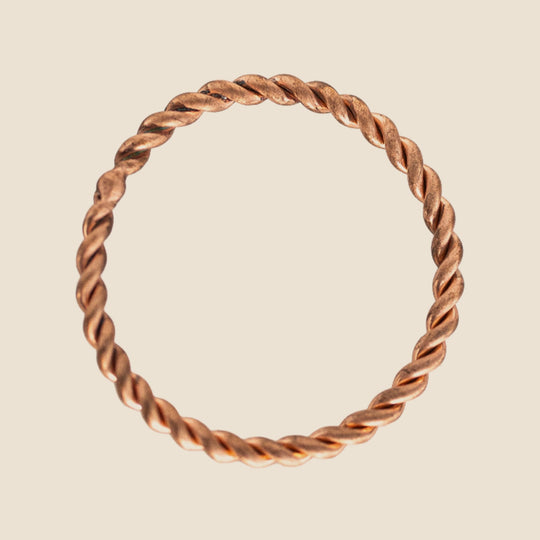
The copper spiral forms the distinctive top of every electroculture stake.
The compact size suits pots and small boxes well; 60 cm gives more height in a larger garden setup.
With four stakes you can cover several plants or mark out a defined shape around part of your garden.
You unpack a luxury black branded box. So you can give it away straight from the box, without wrapping anything around it.
A Kopero card is inside the box. The QR code on it takes you to the digital manual.
30-day money-back guarantee
Place the four solid copper antennas upright in the soil beside the plants you want to experiment with. Choose 30 cm for pots or 60 cm for your border or vegetable patch. The antennas are entirely passive.
Push on the stake when you put the antenna into the ground, not on the coil. It bends easily and should stay round, clear of leaves and mesh. Keep your distance from the roots of the plant itself.
From early field trials to experiments in space, researchers have explored electric fields and plant growth. Read more in Electroculture in the Soviet Union and into space.
Start with a soft cloth. Only polish when the shine fades. A personal patina is part of copper; let it develop or polish the shine back.
The antennas go into the ground and that is it: no power, no batteries, no upkeep.

Is the spiral on top still round? If it bent in transport, carefully bend it back.

Place it by the plant, on the sunny side and out of the walkway, away from the roots. Indoors: just in the pot.

Press the antenna about 8 to 10 centimetres into the soil, until it stands firm and doesn't tip over. Press on the stem, not on the coil.

The spiral sticks out above the plant, clear of leaves and mesh.

Place them around a bed, in the four corners, or one per pot. No fixed distance is prescribed.

Only polish the copper when the shine starts to fade and you want to restore it. Use lemon and salt (salt crystals can be mildly abrasive, so let the salt dissolve completely in the lemon juice before polishing). Rinse thoroughly and dry straight away. Prefer a patina? You can let it develop.
The full guide comes with your product: scan the QR card in the packaging.
Antennas, entirely passive
For pot or border
Solid copper right down the stem
Field trials on electroculture
Polish it back, and melting copper down costs it nothing
Copper conducts electrical charge well. This is the material property on which the electroculture tradition builds when connecting the air above a plant with the soil below.
In electroculture, antennas are used with the aim of supporting germination and growth. A passive antenna needs no power supply. A way to bring this gardening tradition into your own pots, border or vegetable garden.
Solid copper can stay outdoors and develop a darker patina. You can move the antennas for a new season or crop, and compare growth with a similar spot without an antenna.

The 30 cm antenna is the most practical size for smaller plants and pots, indoors or outdoors. Push the antenna upright into the soil, with the copper coil above the plant.

Next to a pot, the 30 cm antenna also works well among smaller vegetable plants. Same copper coil, just closer to the ground.
Unpack it at your own pace, feel the weight and see whether the size suits you. If it is not for you, send it back within thirty days and get your money back. If you use it for longer than you need to judge it, we may deduct for loss of value. You arrange the return yourself with whichever carrier suits you best, or you ask us for a return label. The cost of sending it back is yours.
Translated from the original language where needed.
Lovely long stakes for the vegetable garden

Lovely stakes for the garden

A fun experiment

Looks lovely!

Good quality stakes. All copper, so they will last a long time

Read about it online. It really works!!

A lovely set. We are going to try it

The rods look good. Fun to experiment with

The little plants seem to grow faster

Beautiful rods, curious to see if they work!

Electroculture is a gardening tradition that dates back to 1746 and has since prompted serious research: the UK's Ministry of Agriculture measured 30 to 50% higher yields in its own field trials between 1918 and 1936, and Nature Food published a 2022 study in which peas under an electric field germinated 26.3% faster and yielded 17.9% more. Results vary by garden, plant and season; the best way to find out is to compare with and without an antenna in your own garden.
The 30 cm antenna is the most practical size for smaller plants, pots and window boxes, indoors or outdoors. The 60 cm antenna is meant for larger beds, vegetable patches and taller plants, and offers more reach. Both are made entirely of solid copper, including the stem, and work in exactly the same way.
Nowhere. The antennas work entirely passively, without power, batteries or maintenance. You push them upright into the soil and leave them be.
Push the antenna in by its stem, not the coil, about 8 to 20 centimetres into the soil depending on its length, until it stands firm and doesn't tip over. Place it by the plant you want to treat, on the sunny side and out of the way of foot traffic, with the coil sticking out freely above the plant and not covered by leaves or netting.
Yes, copper is weather-resistant, so the antennas can stay in the garden all year, including winter. They will discolour over time; that's completely normal and doesn't affect how well they work. Just take them out before digging or mowing. More on caring for them is in the included guide.
For the same reason an earth rod is copper: of all metals only silver conducts better, and copper keeps doing so in wet ground for years. The European lightning protection standard EN-IEC 62305 lists copper as a conductor and as an earth electrode, and what an electrician calls earthing is literally a copper connection to the soil. That is why our antennas are solid copper along their whole length, stake included.