What happens when water flows through copper or sits in it?
From copper pipes to bottles and tensor rings by the tap. See where water touches copper, what contact time changes and what researchers measured.
Written and source-checked by the Kopero editors · Updated November 7, 2026

Sometimes water passes copper in seconds. Sometimes it rests against it for hours. And sometimes it flows through the open centre of a copper ring. These are three distinct encounters with copper, each with its own place in your daily water routine.
In short
- Water touches the inside of a copper pipe, even while the tap is off.
- In an unlined copper bottle, the water stays in direct contact with the wall until you pour it out.
- With a tensor ring around the spout, the stream passes through the open centre of the ring.
Through a copper pipe
Water runs along the bare inner wall of a copper drinking-water pipe. Turn off the tap and some water stays in the pipe, still in contact with the metal. In experiments that alternated between standing and flowing water, researchers measured changes in the amount of copper in the water. Contact time and water chemistry both play a part. A single tap can deliver water that has spent very different lengths of time against copper.
Water at rest in copper
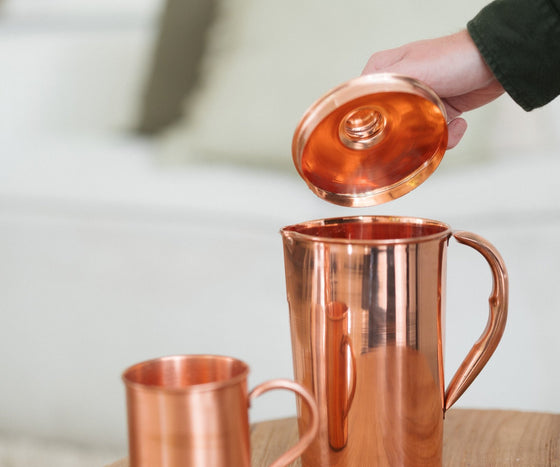
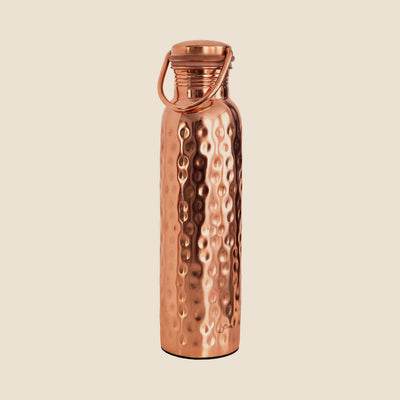
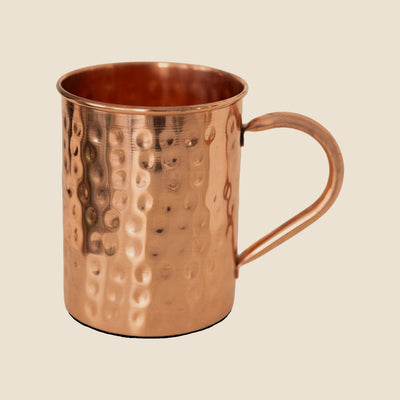
In an unlined copper bottle, cup or jug, water touches the bare wall. In the Ayurvedic practice of tamra jal, you let fresh still drinking water rest in copper and pour it later. Sudha and colleagues studied this contact in a controlled experiment with copper pots. After sixteen hours at room temperature, the six bacterial strains they added could no longer be cultured. Start your own routine with fresh drinking water. Find more about the experiments in our guide to copper’s antibacterial properties.
Copper ions in a water system
Buildings also use copper in active water treatment. A copper-silver ionisation system uses electrodes to introduce copper and silver ions into the water and monitors their concentrations. The US CDC discusses the technology for managing Legionella in building water systems. The controlled dosing is what sets this application apart from a copper pipe or drinking bottle.
A tensor ring by your tap
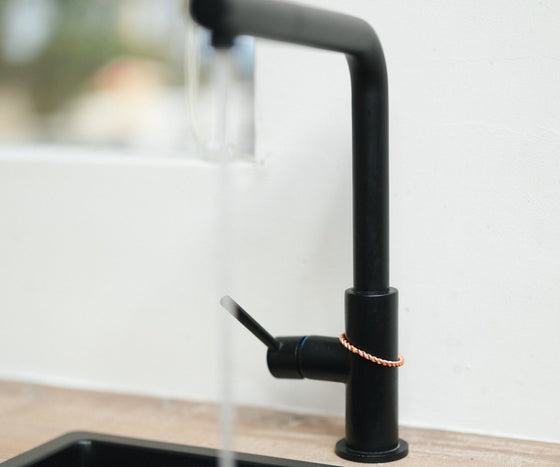
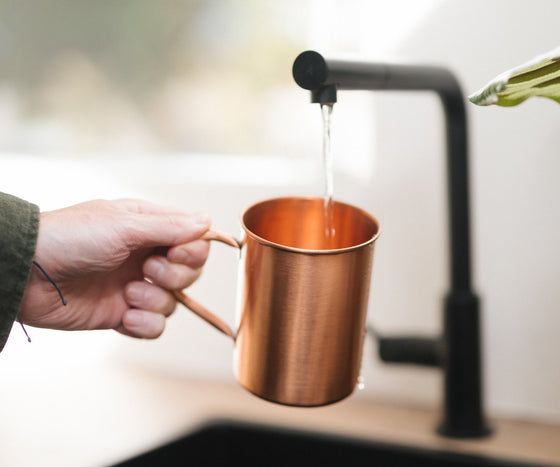
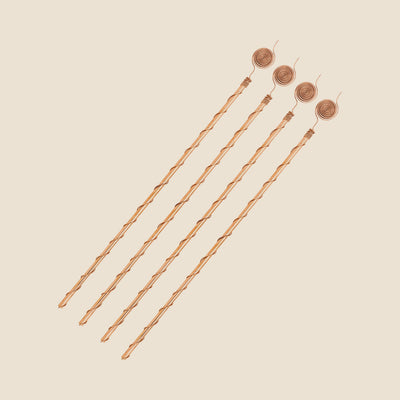
A copper tensor ring gives filling your glass a place in your daily routine. Slip the ring around a suitable spout so the stream falls through the centre, with a gap between the water and the copper. If the ring sits better off the tap, place it next to your glass or jug. Our guide to using a tensor ring shows you other places to put it. In the photo, the ring sits lower, around the base of the tap.
Make it your own water ritual
Want the water to touch bare copper? Pour fresh still drinking water into a copper bottle or jug. Want to make filling up at the tap a daily ritual? Give the tensor ring a place there. They go together nicely too. Fill your bottle at the tap, then let the water rest in the copper.